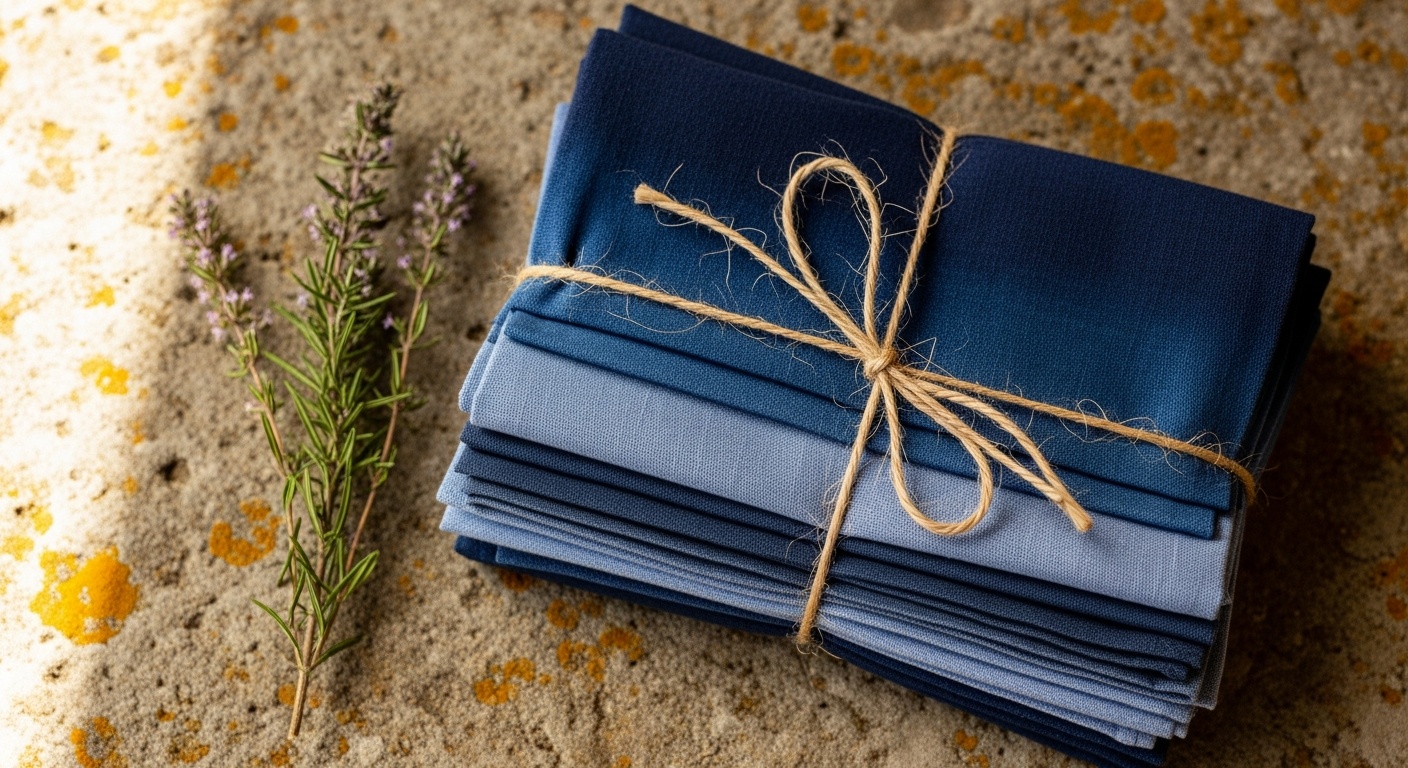
Six linen napkins in a deep, uneven indigo that shifts from near-navy to a washed denim blue depending on the fold. The kind of table linen that makes a simple lunch feel considered.
These came from a retired textile dealer in Arles — a woman who had spent forty years buying and selling Provençal fabrics and had kept her personal favourites wrapped in tissue in a cedar armoire at the back of her apartment. The napkins were among them, still carrying the faint woody scent of the cupboard.
The dye
Plant-based indigo, hand-dipped. You can see the slight variation from napkin to napkin where the dye took differently — one is a full shade lighter than its siblings, and two have a greenish cast at the selvage that suggests they sat at the edge of the vat. This irregularity is the whole point. Commercial indigo looks flat; this looks alive.
Each napkin remembers a different moment in the dye bath. That’s what makes a set like this feel human.
The linen itself is a medium-weight European flax, softened by decades of washing to that wonderful drape that new linen only promises. Minor fading along the fold lines — the kind that adds character rather than diminishing it. No holes, no stains, no repairs.
Use them for a dinner table, frame one as a textile swatch, or keep the set as an heirloom that will only improve with time. They press beautifully but look equally good rumpled on a farmhouse table next to a torn baguette.