L’Isle-sur-la-Sorgue, Vaucluse
Why Maison Clouet
There is a rhythm to Sunday mornings in L’Isle-sur-la-Sorgue that has nothing to do with the clock. The light comes early and low across the water, picking up dust on the tables the dealers set before dawn. By eight, the streets along the Sorgue are lined with crates of glassware, piles of hemp grain sacks, towers of mismatched faience, chairs stacked six high on flatbeds. Everyone is looking for the thing they didn’t know they needed — the small green bowl, the linen that’s been washed a hundred times and feels like nothing else.
Maison Clouet was born from that feeling. Not the thrill of the deal, but the slower pleasure of holding something old and well-made and imagining the life it had before you. I started buying objects from estate sales across the Luberon — a brass lamp from a notary’s study in Apt, a stack of napkins dyed in Arles, an opaline vase from a farmhouse near Gordes — and bringing them home because I couldn’t leave them behind. The shop came later, almost by accident, when there was no more room in the apartment.
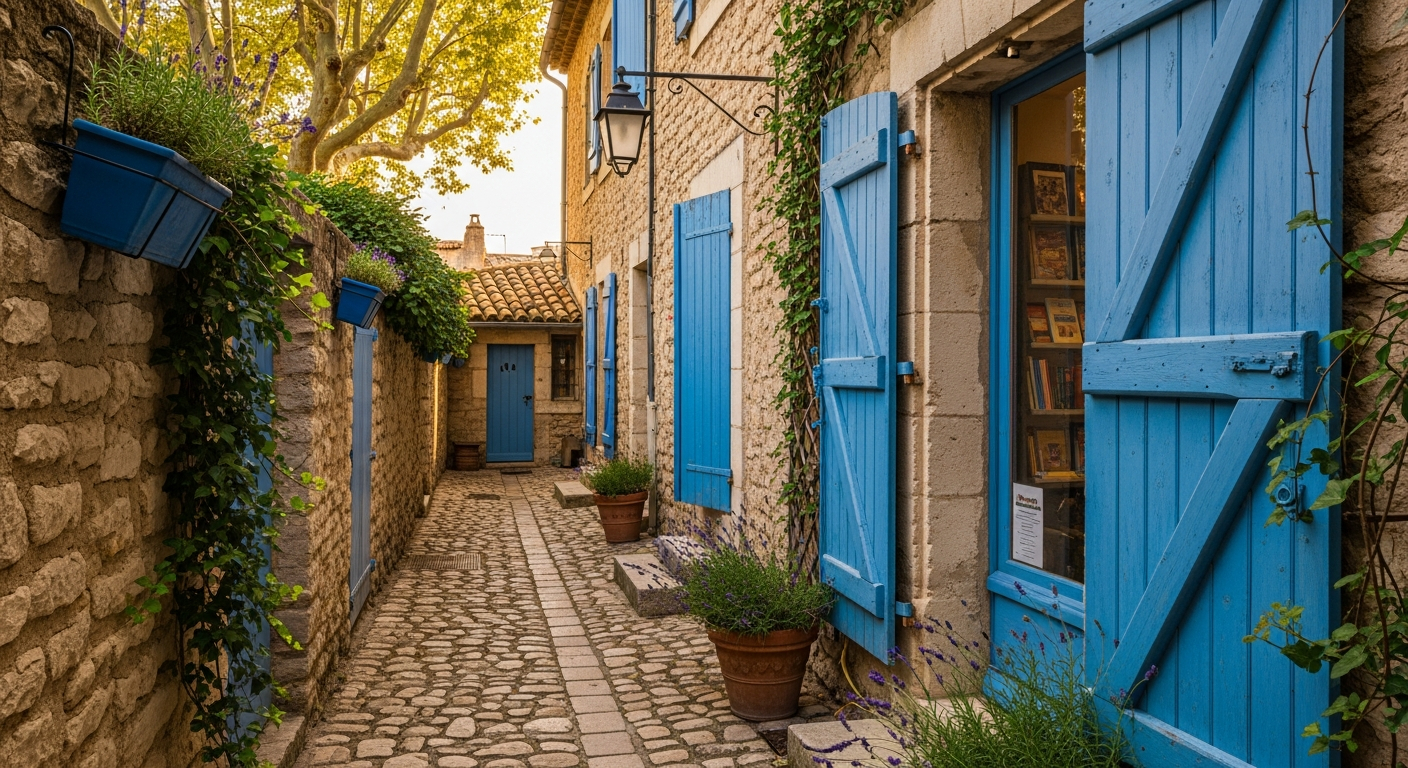
Behind the bookshop
The space is tucked at the end of a narrow passage beside a second-hand bookshop on rue du Petit Paradis. You almost have to know it’s there. The entrance is a low wooden door — the kind with a latch you have to lift, not turn — and behind it is a single room with thick stone walls and a floor of old tomettes that slope gently toward the canal.
I found it on a Tuesday in January, when the town was empty and the only sound was the Sorgue running under the bridge. The landlord told me the room had been a silk-worm nursery two centuries ago, then a storage cellar for a wine merchant, then nothing at all for a long time. The walls still smelled faintly of stone and lavender when I signed the lease.
Look for the blue door, past the bookshop

The daily rhythm
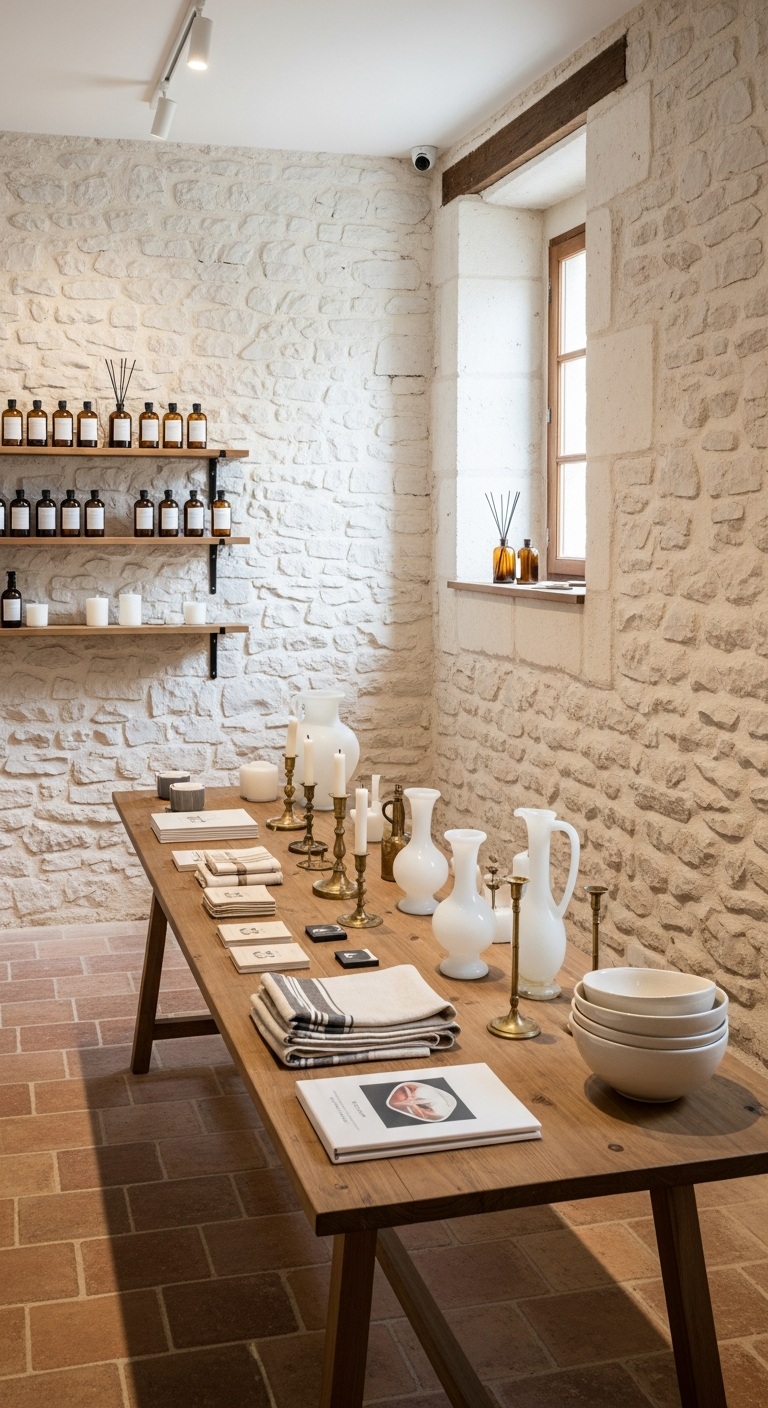
Most mornings I open slowly — unlock the door, set out whatever arrived during the week, light a candle from the scent line. The objects live on a long oak table that runs the length of the room and on a set of shelves I built from old scaffolding planks. Nothing is behind glass. You’re meant to pick things up, turn them over, feel the weight.
In the back, behind a linen curtain, is the blending station where I mix the candles and room sprays. The scents are all built from materials I source locally — lavender from the plateau de Valensole, bitter orange from a grove near Carpentras, dried fig leaf I gather myself in autumn. When the shop is quiet, I’m usually back there, testing ratios.
People who come here tend to stay a while. That’s intentional. I want the shop to feel like someone’s home — the kind of place where you lose track of time looking at small beautiful things.
On curation and care
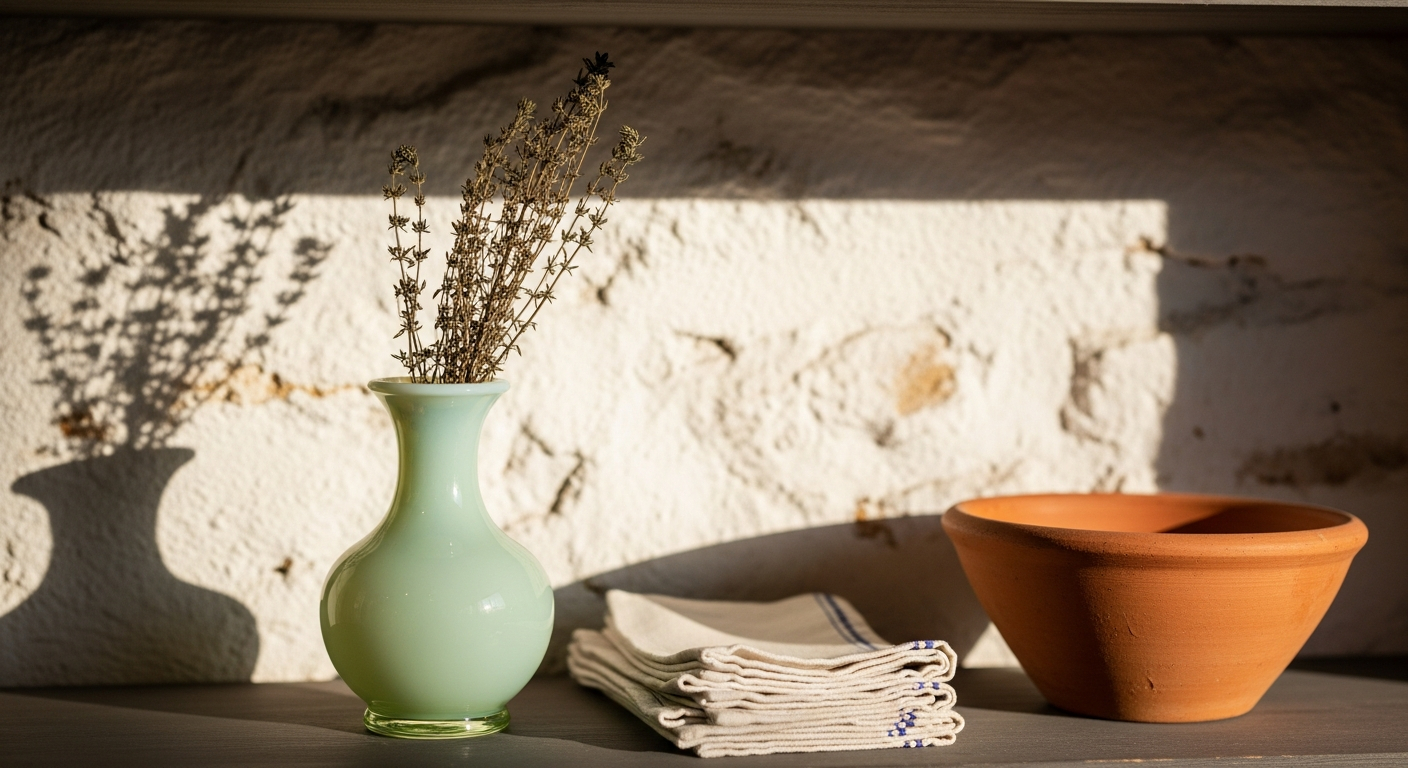
I don’t buy for resale. I buy because something stops me — the shape of a handle, the particular green of a glaze, the way a piece of linen has softened through decades of washing until it feels like it barely exists. Every object in the shop is something I would keep if I had infinite shelves.
I write a short story for each piece: where I found it, what I know about its origin, why it caught my eye. These aren’t antiques in the museum sense — they’re domestic objects that were used and loved and set aside, and they deserve a second life in a home that will appreciate them.
The best objects are the ones that make you slow down and look more carefully.
Nous trouver
We are deliberately hard to find. That’s part of the charm.
Adresse
7 rue du Petit Paradis
84800 L’Isle-sur-la-Sorgue
Vaucluse, Provence
Walk past the bookshop, take the narrow passage on the left. Blue door at the end.
Horaires
Mercredi — Samedi : 10h — 18h
Dimanche : 9h — 14h (marché)
Lundi & Mardi : fermé
Sundays are best. We open early for the brocante market.
En voiture
From Avignon: 30 min via D901
From Aix-en-Provence: 1h via A7
Parking at Place de la Juiverie
Sunday parking fills by 9h. Come early or walk from the north lot.
Venez voir
The best way to experience Maison Clouet is in person — to hold the objects, smell the candles, sit for a moment by the canal. But if you can’t make it to Provence, everything in the shop is also available online, photographed and storied with the same care we give it in the room.